
How To Measure A Room
Learn how to measure a room with just yourself and a tape measure in less than 3 steps.
Whether you are planning a home transformation or just want to renew the carpet in your living room, everything starts with a tape measure. Get your measurements wrong, and you risk costly delays, mismatched batches, or excessive waste.
At Flooring Cash and Carry, we’ve spent over 25 years helping Manchester find the perfect floor and install it. This guide will walk you through exactly how to measure your room like a pro.
Tools you may need:
- Tape measure
- Pen or pencil
- Piece of paper or notepad
- A helpful assistant - if you can find one!
Things to keep in mind when measuring up
Whether you’re measuring your floor for high gloss laminate, vinyl flooring, luxury vinyl tiles, or carpet, the basics are the same.
Keep these points in mind:
- Only record the actual measurements. Don’t add any allowances just yet.
- Stick to metres when measuring, it’s how flooring is usually priced.
- Measure any drop-backs, alcoves, or fireplaces.
- Measure all the way into the doorways, as well as the width.
- Note the number of doorways so you can accurately calculate door bars and thresholds.
How to measure a room : step by step
1. Create a sketch of your room
Step 1 involves creating a rough sketch of the room you plan to measure. This will allow you to visualize the entire floor area as a single "birds-eye" plan, making it much easier to track where one measurement ends and another begins. By having this visual guide, you can ensure that every permanent feature—from chimney breasts and radiator pipes to window bays and fitted wardrobes—is clearly accounted for before you start your calculations.
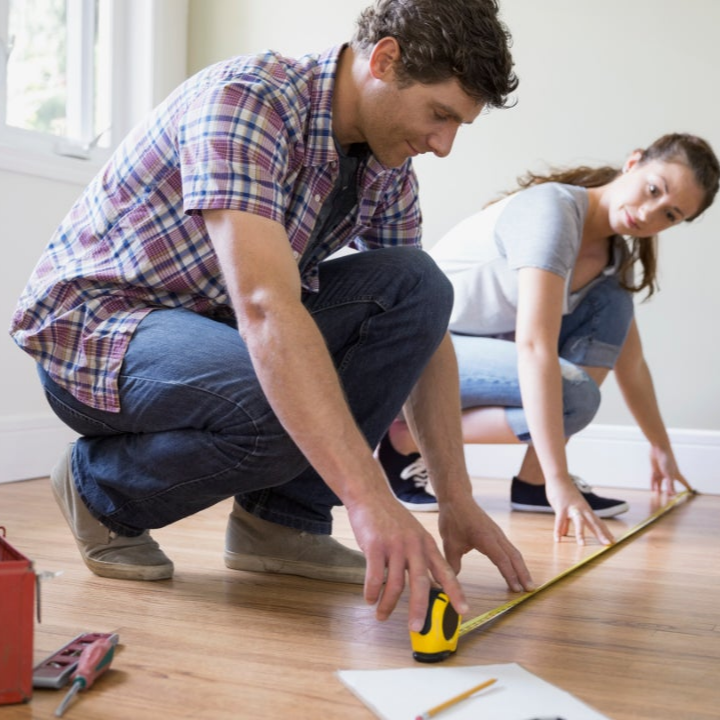
Step 1: Figure out the square footage.
Step 1: Figure out the square footage of each room in which you want to install laminate-wood floors. To do so, use a tape measure to determine the room’s length and width. Then multiply the length by the width to get your square footage. For instance, if the room is 12 feet wide and 12 feet long, you will need enough flooring for 144 square feet (12×12=144).
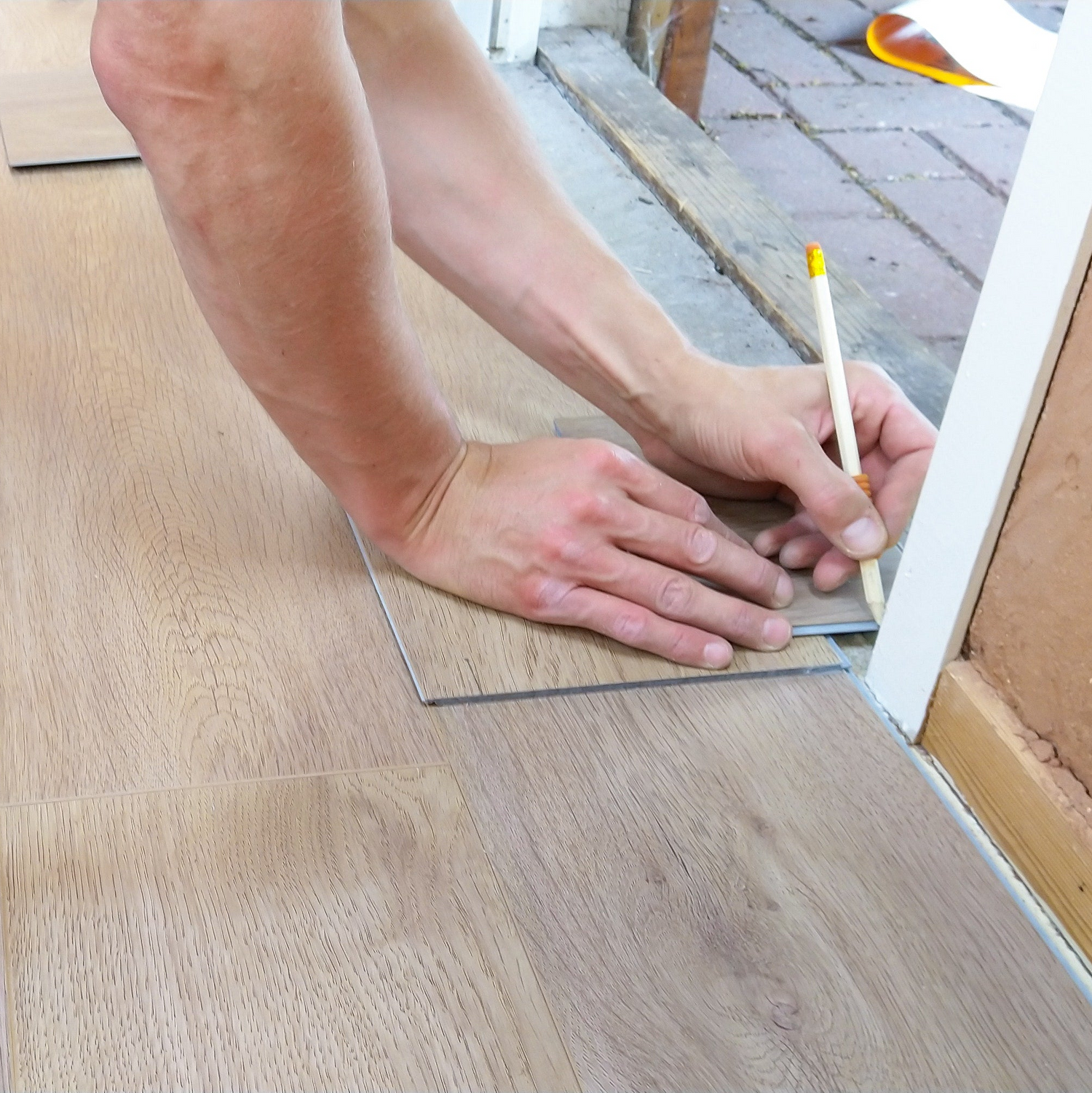
Step 2: Add 10% for waste
Step 2: Add 10% to the square footage to accommodate cuts and waste. (If you’re choosing a tile pattern, add 20%). This is important because the cuts in the flooring need to be staggered. And you’ll want pieces left over just in case you need to mend or replace a board. So that’s 144 feet plus 10%, or 14 feet, for 158 square feet
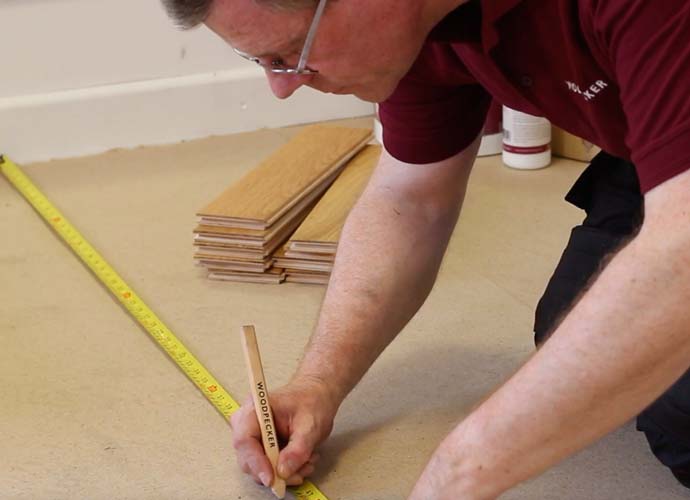
Step 3: Check with a retailer.
Step 3: Check with a retailer to get your order just right. Your measurements will certainly give you a good ballpark estimate when you multiply your square-foot needs by the retailer’s price per square foot, though little things can make a difference in the actual calculation. For instance, for installation in rooms larger than 40 feet long or 25 feet wide, a transition piece will be required.

Step 4: Relax.
Step 4. Put the kettle on, kick your feet up and admire your new flooring.